




Big studios cut thousands of jobs in 2024 and 2025 (approximately 14,600 gaming layoffs in 2024 alone, per Statista, with over 100 companies reporting layoffs in 2025), but small, focused development teams are shipping games that perform just as well, often faster and at a fraction of the cost. If you're a startup, brand, or business planning to build a game, this shift matters directly to you. It means you no longer need a massive in-house studio to build something competitive. A lean, experienced game development company can now do the job that used to require hundreds of people. At SlashifyTech, we've built exactly this way with Cricket or Nothing, our shipped PvP cricket multiplayer Unity mobile game (iOS and Android, F2P with IAP), which demonstrates the model working in production. Here's what's actually happening in the industry, and what it means for anyone planning to build a game in the next year.
What's happening in game development right now?
Major studios are shrinking while small, focused teams are proving they can deliver just as much value.
2026 has seen some of the biggest restructuring the game industry has experienced in years. The numbers are stark: approximately 14,600 gaming jobs were lost in 2024, following 10,500 in 2023. The layoffs peaked in early 2024, with 8,619 jobs lost in the first quarter alone, marking the highest quarterly number in gaming history. Entire studios shuttered, including Arkane Austin, Ready at Dawn, Volition, and Riot Forge.
The pattern continued through 2025. More than 100 gaming companies worldwide reported layoffs by November 2025, with major cuts at Microsoft, EA, Activision Blizzard, Unity, PlayStation Studios, Sony, Riot, Ubisoft, Take-Two, Tencent, and Embracer. In July 2025 alone, Microsoft laid off 9,000 tech workers, including hundreds at its video game companies.
Meanwhile, the overall gaming market kept growing. Small development teams (sometimes just a handful of people) are releasing games with production quality and player engagement that used to require studios ten times their size.
The two trends are connected. Big studios overspent on bloated pipelines and slow decision-making, and the market is correcting for it. Smaller, better-run teams are filling the gap.
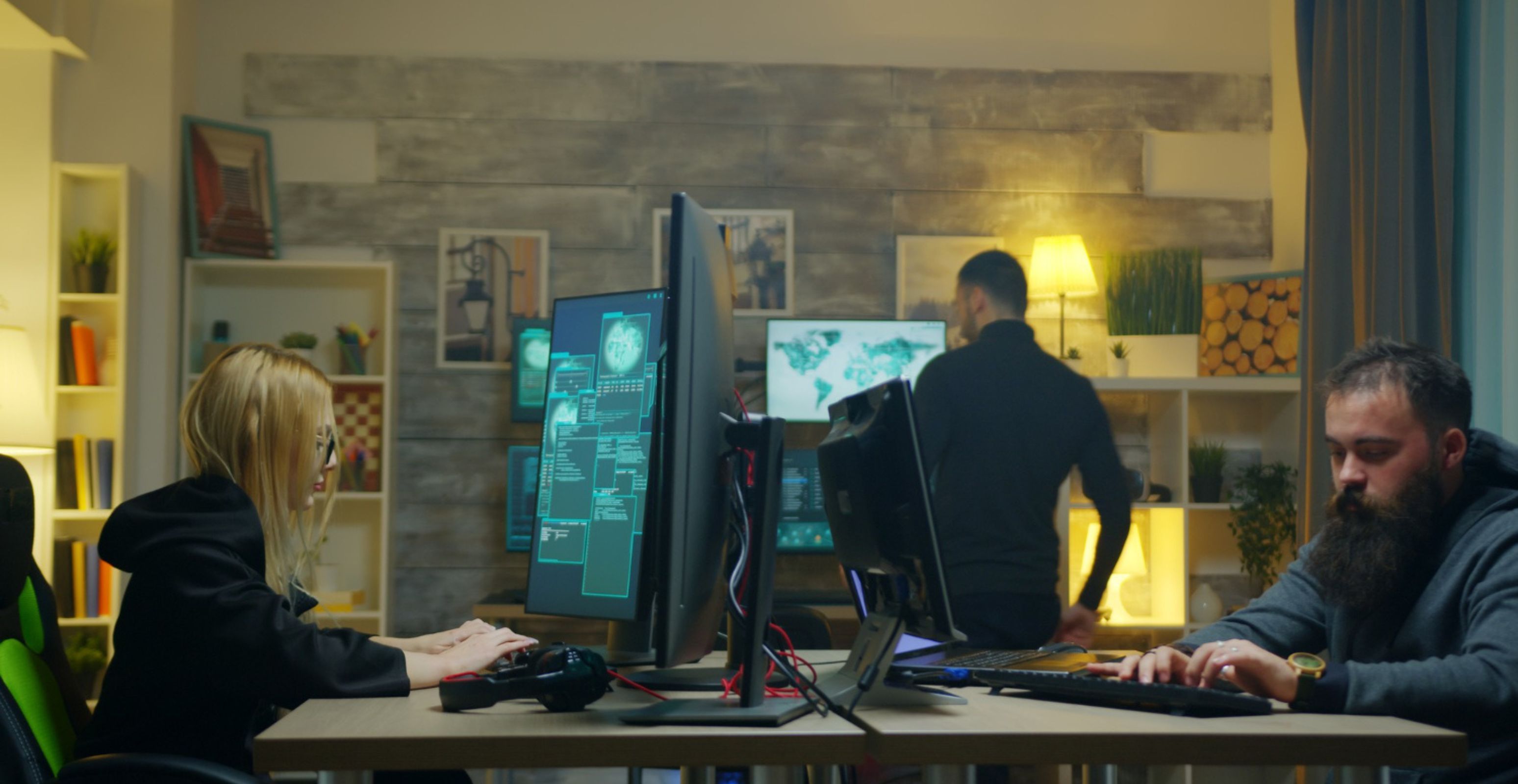
Why are big studios struggling while small teams are thriving?
Big studios are struggling because their overhead has outgrown what their games actually earn back, while small teams stay lean by design and adapt faster.
The budget numbers tell the story. According to the UK's Competition and Markets Authority, AAA game budgets have surged from a previous range of $50-150 million to $200 million and higher for games launching in 2024 or 2025. Some franchises like Call of Duty and Grand Theft Auto have budgets exceeding $250 million and $300 million respectively. When you add marketing costs on top (which the CMA notes can range from $50-150 million per title, or combined with development to reach $660 million for the biggest franchises), a single underperforming release becomes an existential problem for even the largest studios.
Large studios also carry costs that have nothing to do with making a good game: layers of management, long approval chains, and infrastructure built for projects that may never ship. When a big-budget title underperforms, that overhead becomes a liability fast. It's why newly founded AAA studios like Ridgeline Games and Deviation Games shut down before even releasing their first video game.
Small, focused teams don't carry that weight. They make decisions quickly, use modern engines and cross-platform tools that let one build run on mobile, web, and desktop with minimal extra work, and stay closely connected to the people actually playing their game. That combination (lower cost, faster iteration, tighter feedback loops) is exactly what most businesses need when building a game as part of a product or marketing strategy, not as a billion-dollar franchise bet.
Do you need a big studio to build a successful game?
No. A big studio is no longer a requirement for building a game that performs well, and for most businesses it was never the right fit in the first place.
If you're a startup building a game as a core product, or a brand adding a branded game for engagement and marketing, you don't need the scale of a AAA studio. You need a game development company that understands your platform (mobile, web, or desktop), can move quickly through design and development, and builds something that's stable, fun, and ready to scale if it takes off.
At SlashifyTech, Cricket or Nothing is exactly this model in action. It's a Unity PvP cricket multiplayer mobile game on iOS and Android, F2P with IAP, built with server-authoritative multiplayer architecture and the anti-cheat measures competitive PvP genuinely requires. Not by a 300-person studio. By a focused senior team working directly with the client, without layers of bureaucracy slowing decisions down.
That's precisely the model that's outperforming bloated studios right now. Small, senior teams working directly with the people who hired them, shipping commercial mobile games that don't need a billion-dollar budget to reach production quality.
What should you look for in a game development company in 2026?
Look for a game development company that's cross-platform by default, transparent about timelines and cost, and small enough to move fast without sacrificing quality.
A few practical things to check before you commit to a game development company:
- Cross-platform capability from day one. Your game should be built to run on mobile (iOS and Android), web, and desktop without needing a separate rebuild for each. This is standard now, not a premium add-on. Unity handles most of the heavy lifting on this front, which is why our Unity Game Development engagements at SlashifyTech default to cross-platform architecture from sprint one.
- Engine expertise that matches your game. Unity remains the go-to for most 2D and 3D mobile and web games because of its flexibility and speed to market. For projects requiring extreme graphical fidelity, Unreal Engine wins. For projects requiring highly custom lightweight web games, HTML5 frameworks like Phaser or PixiJS win. A good partner will tell you which engine fits your project honestly, not push whatever they're already comfortable building in.
- A clear, milestone-based process. You should know what's being built and when, at every stage (discovery, design, development, QA, and launch) without vague timelines. If the partner can't give you a milestone-based Gantt chart or roadmap during the discovery phase, they're not going to magically produce one during development.
- Post-launch support. A game that launches and gets abandoned won't hold players. Look for a partner who plans for updates, bug fixes, live operations, and iteration after release, not just delivery. Our Mobile Game Development engagements at SlashifyTech include structured monthly live ops retainers exactly because we've seen too many games quietly die from post-launch neglect.
- Direct communication, not a chain of account managers. The teams shipping the best results right now are the ones where you're talking to the people actually building your game. If you have to go through three layers of account managers to get a technical answer, that's a warning sign, not a feature.
- Honest scoping. A partner who tells you "your game concept doesn't need a full Unity 3D build, a 2D approach would ship faster and cost less" is far more credible than one who upsells every project to the most expensive architecture. Look for the studio that will actually push back on your scope when it makes sense.
Is this a good time for startups and businesses to build a game?
Yes. Arguably a better time than it's been in years, because the tools, talent, and delivery models have all matured while big-studio costs have gone the other way.
Engines are more capable, cross-platform deployment is easier, and there's a wider pool of experienced developers now available outside big studios than there has been in a long time. The GDC 2025 State of the Game Industry report found that 11% of surveyed developers were laid off in the past 12 months, and 41% of developers were impacted by layoffs overall. A significant number of those developers are now available to work on smaller, focused projects at studios that operate the way this blog is describing.
For a startup building a game-based product, or a business looking to add an interactive experience to their brand, the barrier to entry has genuinely dropped. Not in terms of quality, but in terms of cost and time to launch.
How SlashifyTech fits into this shift
This is exactly the model SlashifyTech is built around.
As a game development company, we're a lean, senior team that builds 2D, 3D, mobile, and web games using Unity and modern cross-platform tooling. Without the overhead, bureaucracy, or long timelines that come with a large studio. From initial concept through design, development, QA, and post-launch support, you work directly with the people building your product, with a clear roadmap from day one.
Cricket or Nothing, our shipped commercial mobile game, is the proof of this model in production. It's a Unity PvP multiplayer cricket mobile game on iOS and Android, F2P with IAP, built with server-authoritative networking, anti-cheat, live ops-ready content pipeline, and the kind of production discipline commercial mobile gaming actually requires. Not shipped by a 100-person studio. Shipped by a focused senior team working directly with the client.
Whether your project fits Mobile Game Development (flagship, mobile-first), Unity Game Development (technology-led, cross-platform), 2D Game Development (casual, hyper-casual, branded), or 3D Game Development (competitive PvP, sports simulation), we approach every engagement from the same foundational discipline: architecture built for change, monetization built for trust, and a delivery team small enough to move fast without sacrificing quality.
The bottom line
The AAA studio contraction isn't a temporary blip. It's a structural correction that started in 2023, peaked in 2024 with 14,600 gaming layoffs, and continues through 2025 with over 100 companies affected. Budgets that used to justify themselves at $50-150 million now sit at $200-300 million or higher, and the market has stopped absorbing that math cleanly.
For startups, brands, and businesses building games (which is different from AAA studios building franchises), this is a genuinely better time than any recent year. The tools have matured, cross-platform deployment is easier, and lean senior teams can ship commercial-quality games at a fraction of AAA budgets and timelines.
At SlashifyTech, Cricket or Nothing is the proof of this model in production. If you're a startup or business looking for a game development company and want to understand what a realistic timeline and budget would look like for your idea, book a discovery call. No pressure, just a straight conversation about what it would take to build it right, and whether a Mobile Game Development, Unity Game Development, 2D Game Development, or 3D Game Development engagement fits what you're actually trying to build.
Frequently Asked Questions
Are big gaming studios really shrinking, or is this overstated?
The data is unambiguous. Approximately 14,600 gaming jobs were lost in 2024 alone (per Statista), following 10,500 in 2023. Over 100 gaming companies reported layoffs in 2025 (per Obsidian Tracker). The GDC 2025 State of the Game Industry report found 41% of developers were impacted by layoffs. These aren't sensationalized numbers, they're the industry's own tracking. The shrinkage is real, and it's structural rather than temporary.
Can a small team actually ship a commercial-quality mobile game?
Yes. Cricket or Nothing, our shipped PvP cricket multiplayer Unity mobile game on iOS and Android, is proof of this. Server-authoritative multiplayer architecture, F2P economy with IAP integration, anti-cheat measures, and the kind of production polish competitive mobile gaming requires, all shipped by a focused senior team rather than a 100-person studio. Modern Unity tooling, cross-platform deployment pipelines, and cloud-native backend architecture (Photon, Mirror, or custom Node.js/Go servers depending on scale) have made this genuinely achievable for lean teams in 2026.
How much does it cost to build a game with a small studio versus a big one?
The cost difference is significant. AAA studio games now cost $200 million+ in development budgets and often another $50-150 million in marketing (per the UK's Competition and Markets Authority). At SlashifyTech, focused casual mobile games start from ₹10,00,000 to ₹20,00,000. Full F2P mobile games with IAP economy typically run ₹20,00,000 to ₹40,00,000. PvP multiplayer live service mobile games with competitive architecture, anti-cheat, and live ops infrastructure range from ₹40,00,000 to ₹80,00,000+. That's not the same category as AAA gaming, but it's exactly the category most startups, brands, and businesses building games actually need.
How long does it take a lean team to build a mobile game versus a big studio?
A focused casual mobile game with core gameplay and Play Store submission typically takes 4 to 6 months. A full F2P mobile game with IAP economy and progression takes 6 to 9 months. PvP multiplayer mobile games with real-time architecture, anti-cheat, and competitive features take 8 to 12 months. These timelines match what a lean, focused team can genuinely deliver. Big-studio timelines for equivalent scope routinely run 2 to 4 years because of coordination overhead across large teams, which is exactly the cost pattern the industry is currently correcting for.
What should I ask a game development partner before I sign a contract?
Ask for a specific example of a shipped commercial game in their portfolio, not just concept work or demo footage. Ask how they handle post-launch live operations. Ask what their milestone-based process looks like. Ask directly whether you'll be working with the senior team building the game or with account managers. Ask what happens if the project runs over scope or if scope needs to change mid-build. The gap between studios that answer these questions directly and studios that give vague reassurances is significant, and it's where most bad partner selections fail.
Is now actually a good time to start a game project, or should I wait?
Now is arguably better than it's been in years. Engines are more capable, cross-platform deployment is easier, and a significant number of experienced developers are available to work outside big studios (which is a direct consequence of the industry layoffs). For startups and businesses building games as products or marketing, the cost and time barriers have genuinely dropped. Waiting for the industry to "stabilize" typically means waiting past the window when your competitor ships first.


